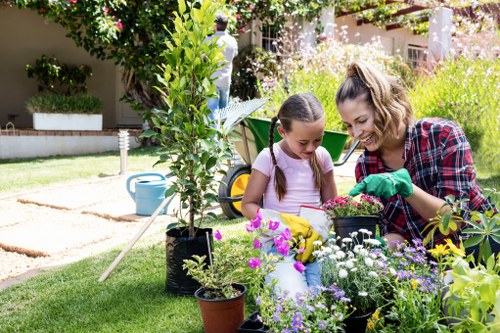
Garden Maintenance Camden Town: Recycling and Sustainability
Garden Maintenance Camden Town is committed to creating an eco-friendly waste disposal area and a truly sustainable rubbish gardening area for homes and communal green spaces across the borough. Our approach to garden maintenance in Camden Town prioritises source separation, re-use, and closed-loop composting so that soil and plant materials are returned to the local landscape where possible. This page explains our targets, operations, partnerships and the practical steps we take to reduce carbon and landfill from garden waste.Why sustainable garden work matters
Maintaining Camden Town gardens and greenspaces sustainably reduces emissions, improves soil health and saves landfill space. Camden Town garden maintenance means more than tidying lawns: it is about designing a system for green waste that includes dedicated composting bays, wood-chip reuse, and separate collection streams for biodegradable material. We align with the borough's approach to waste separation, which encourages dry recycling, food waste and dedicated garden waste streams where available. Key recyclable flows we handle include:
- Green waste (grass cuttings, leaves, prunings) destined for municipal or on-site composting.
- Wood and branches separated for chipping and mulch production.
- Packaging and non-biodegradable materials sorted for the borough’s dry recycling stream.
Practical systems for a sustainable rubbish gardening area
We set up on-site segregation points in communal gardens and for private properties, using labelled bins and secure compost bays. Our Camden Town garden maintenance services implement rotational composting to ensure high-quality humus and to reduce odour or pest issues. Where on-site composting is unsuitable we transfer segregated green waste to authorised facilities, reducing contamination and supporting a circular economy. Local transfer stations and responsible routing — we work closely with the borough and neighbouring transfer stations to ensure garden waste and recyclables are moved efficiently to the right facilities. Our logistics plan uses short transfer legs to nearby council transfer stations and licensed North London sites to keep mileage down and turnaround quick. Examples include borough-operated transfer points and regional transfer facilities that accept separated green waste and wood for composting or recovery.
For garden maintenance in Camden Town we document chain-of-custody for bulk green collections so material is tracked from pick-up to processing. This supports transparent reporting and helps the borough and clients meet recycling targets. Tracking also reduces the risk of mixed loads ending up at landfill.
Partnerships with charities and community organisations are central to our model. We partner with local green charities such as The Conservation Volunteers (TCV), community allotments and social enterprises to redistribute usable materials — from surplus topsoil and mulch to small shrubs and saplings — to community green projects. These partnerships create social value, reuse opportunities and educational programmes for residents about sustainable garden practices.
 Low-carbon fleet and low-impact operations — our Camden Town garden maintenance fleet includes electric vans and low-emission hybrids for short urban trips, supplemented by telematics to optimise routes and reduce idling. Where heavier hauling is required we use optimized payload scheduling and, where practical, biomethane-compatible vehicles. These measures significantly cut CO2 from daily operations, supporting an overall low-carbon gardening service that reduces the environmental footprint of green waste collection and disposal.
Recycling percentage target: Our immediate target for garden and associated household green streams is a 65% recycling and reuse rate by 2028, rising to 75% by 2035 as on-site composting and partnership networks scale. We monitor progress monthly and provide summaries on material volumes and destination types (composting, wood recycling, energy recovery) while working within the borough's waste separation framework to drive continuous improvement.
To make sustainable garden maintenance in Camden Town practical for clients we offer a set of service options:
- On-site composting setup — installation of compost bays and training for householders or caretakers.
- Segregated collection — scheduled collections of clean green waste and wood for local processing.
- Material reuse — wood-chipping for paths and mulches, soil amendment and redistribution to community projects.
 Reporting and accountability are part of our commitment: we provide simple monthly recycling summaries showing volumes diverted from landfill, percentage progress toward our 65% target, and notes on any contamination issues. We also publish annual partnership impact statements showing how redistributed compost, mulch and plants supported local green spaces and community gardens across Camden.
Ultimately, Camden Town garden maintenance that is sustainable relies on small changes repeated at scale: separation at source, strategic routing to local transfer stations, charity partnerships to reuse materials, and a low-carbon van fleet to keep emissions down. By choosing environmentally minded garden maintenance in Camden Town you help turn green waste into a valuable resource and support a healthier, greener borough for everyone.